2026-10-26 ·
Water Heater Repair or Replacement in Georgia: How to Decide
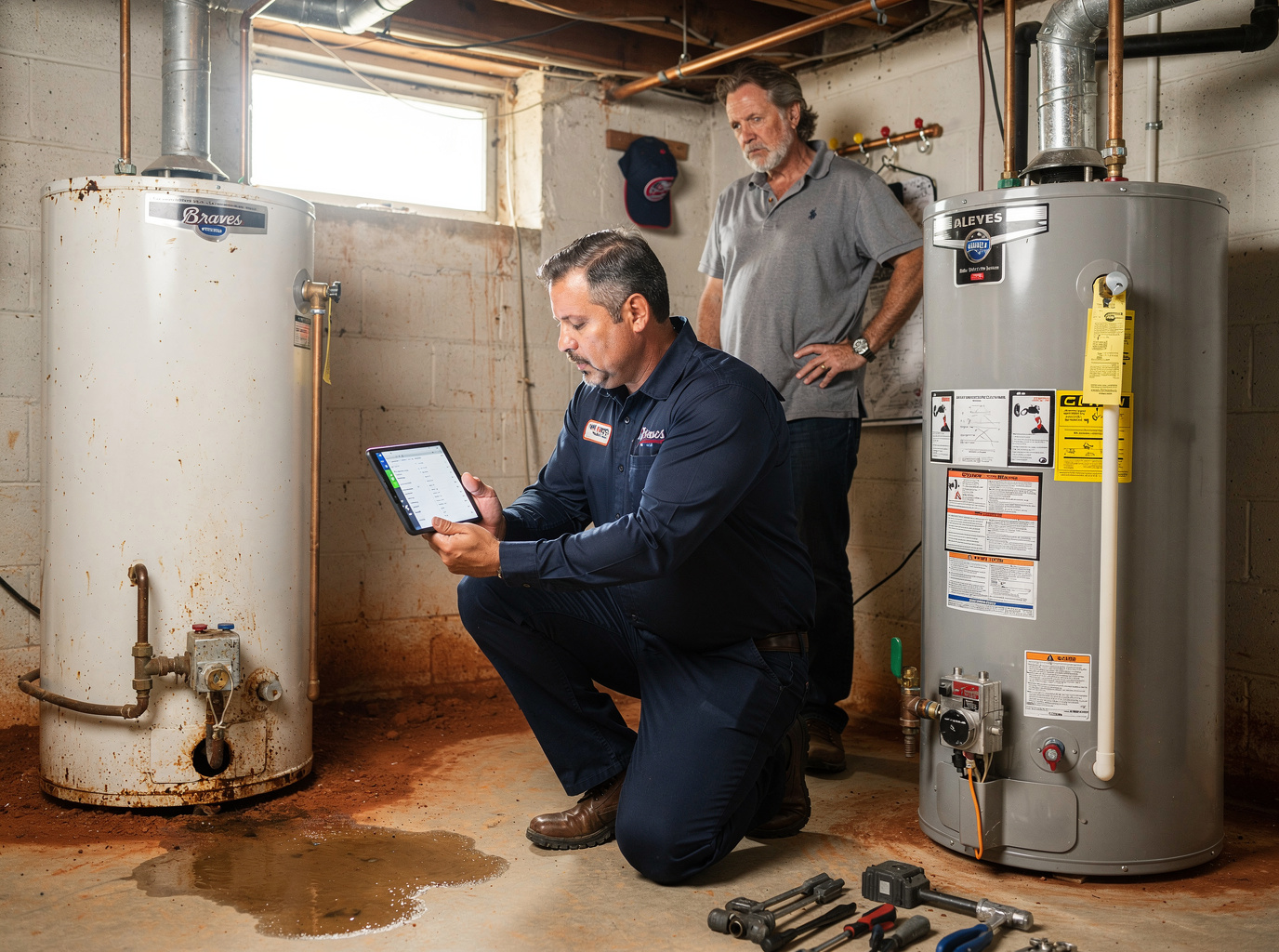
Homeowners in Georgia typically choose repair when the water heater is under 8 years old and shows isolated issues, while replacement becomes the better option once the unit passes 10–12 years and repair estimates exceed $600. The plumber evaluates the tank condition, heating element function, and sediment buildup before quoting either path. In Fulton County homes built before 1990, rust and corrosion appear faster due to the humid subtropical climate with hot summers and mild winters.
Signs Your Water Heater Needs Attention
Rust-colored water, inconsistent temperatures, and unusual noises signal that the tank or heating components are failing. In neighborhoods such as Virginia-Highland and Inman Park, older homes often experience sediment layers that reduce efficiency after 7 years. A leaking pressure relief valve or visible corrosion at the base usually means the unit cannot be restored to reliable service. Homeowners notice higher energy bills when the heater struggles during peak summer demand near Piedmont Park and the Atlanta BeltLine. Checking the manufacture date on the tank label provides the clearest first indicator before any service call.
Factors That Influence Repair Versus Replacement
Age remains the strongest predictor, with most standard units lasting 8–12 years in Fulton County conditions. Repair makes sense for a failed thermostat or heating element on a unit still under warranty, while replacement is required once the tank itself shows internal corrosion. Tank size also matters: a 40-gallon model in a Buckhead condo costs less to replace than a 50-gallon unit serving a larger Grant Park home. Local water hardness accelerates mineral buildup, shortening lifespan compared with homes in Sandy Springs or Decatur. The plumber inspects these details on site to provide a written estimate that reflects actual conditions.
Typical Repair and Replacement Costs in Georgia
Repair work for heating elements or thermostats usually falls between $300 and $700, depending on parts and access. Full tank replacement ranges from $1,200 to $2,200 for a standard 40- to 50-gallon electric model, with gas units adding $200–$400 for venting adjustments. Prices move higher in dense areas like Old Fourth Ward due to parking and permitting logistics. Sediment flushing and anode rod checks can extend life by 2–3 years when performed before major failure. Water heater repair addresses isolated component issues without replacing the entire tank when the unit remains within its expected service window.
Local Climate and Housing Considerations
Georgia’s hot, humid summers increase water heater workload as incoming water temperatures rise, while mild winters reduce freeze risk but allow steady mineral accumulation. Homes near Centennial Olympic Park and Mercedes-Benz Stadium often feature original tanks from the 1990s or early 2000s that now require evaluation. The Atlanta BeltLine redevelopment has brought updated plumbing in some blocks while leaving others with aging lines that affect pressure and sediment. Homeowners in West End and East Atlanta benefit from checking expansion tanks and mixing valves during any inspection. These regional patterns help determine whether a repair will hold through another summer season.
When Replacement Becomes the Practical Choice
Once repair costs approach half the price of a new unit, replacement avoids repeated service calls and improves energy efficiency. Newer models with better insulation reduce operating costs in Georgia’s climate, especially for homes near Georgia Aquarium and World of Coca-Cola that see frequent use. Water heater installation covers proper sizing, venting, and code-compliant connections for the specific property. The plumber handles disposal of the old tank and ensures the new unit matches household demand. This approach prevents surprise failures during peak demand periods.
FAQ
How long should a water heater last in Georgia? Most units serve 8–12 years before replacement becomes necessary due to local water conditions and climate.
What repair signs indicate replacement instead? Persistent leaks, visible tank rust, and repeated element failures after 10 years usually mean the tank itself has reached the end of service life.
Do costs differ between electric and gas units? Gas models add $200–$400 to replacement because of venting requirements, while electric units stay in the $1,200–$2,000 range for standard sizes.
Can flushing extend the life of an older heater? Annual sediment removal and anode checks can add 2–3 years when performed before major corrosion sets in.