2026-10-26 ·
Sewer Line Repair in Georgia: Trenchless vs Dig-and-Replace
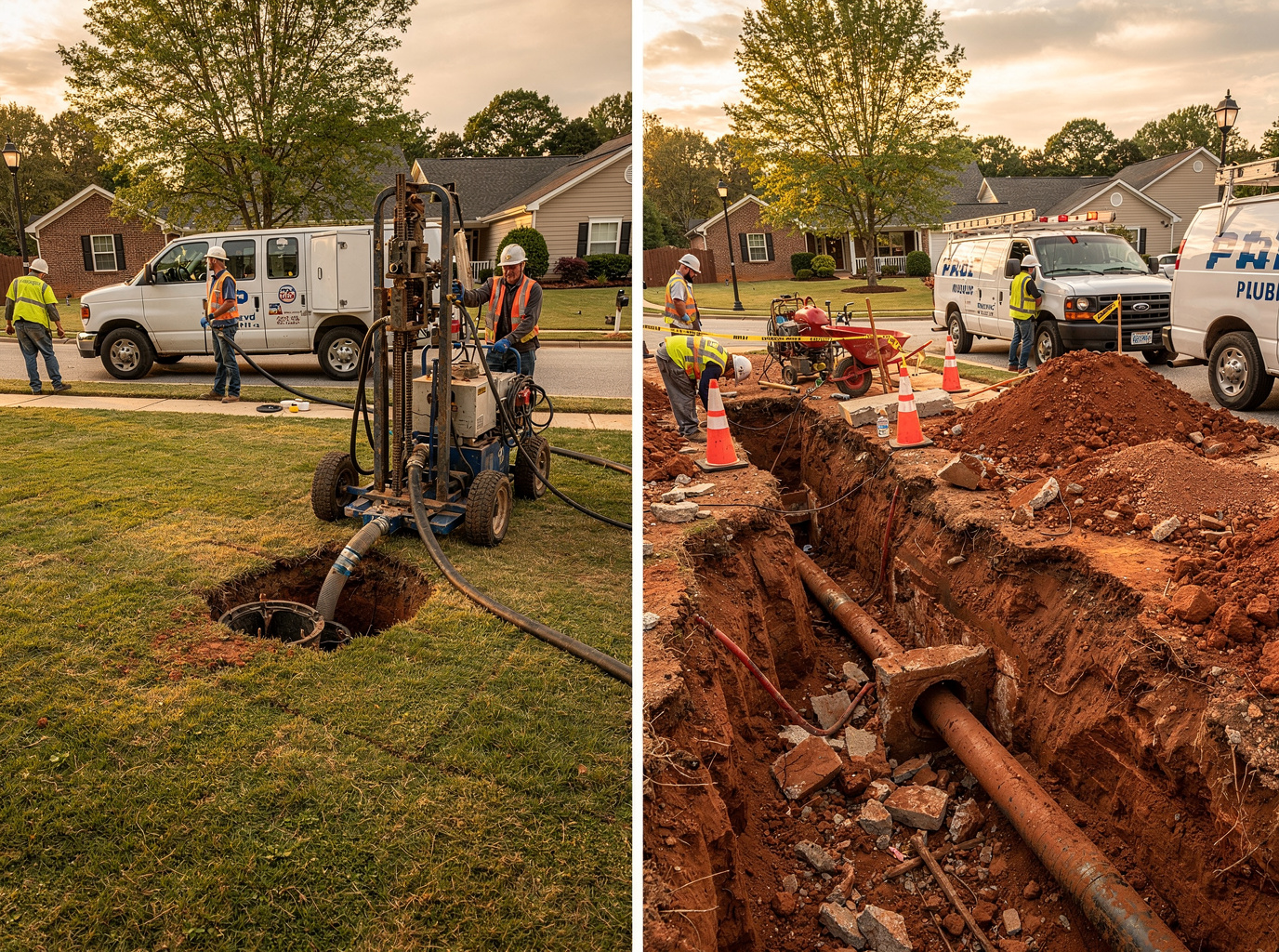
Trenchless sewer line repair in Georgia often ranges from $4,000 to $10,000 and finishes in one to three days with limited digging, while dig-and-replace methods run $6,000 to $18,000 and take three to seven days with more yard disruption.
Trenchless Sewer Line Repair in Georgia
Trenchless methods use pipe bursting or lining to fix lines without full excavation. In Fulton County neighborhoods such as Inman Park and Old Fourth Ward, older homes built before 1960 often have clay or cast-iron pipes that crack from shifting soil during hot summers. The plumber inspects first with a camera to confirm the break location. Pipe bursting pulls a new pipe through the old one, while lining inserts a resin sleeve that hardens in place. These approaches work well near landmarks like Piedmont Park where digging would damage landscaping or sidewalks. Homeowners in Grant Park and East Atlanta see less restoration work afterward. The process avoids tearing up driveways or mature trees common in these areas. Mild winters keep the ground workable year-round, though heavy summer rains can delay outdoor prep. Sewer line repair covers these options when the main line runs under structures or tight lots.
Dig-and-Replace Method
Dig-and-replace involves opening a trench along the entire line to remove and install new pipe. This remains common in Buckhead and Virginia-Highland where access is straightforward and soil conditions allow clean cuts. The plumber measures the run length and depth first, then factors in permits required in Fulton County. Full replacement handles severe collapses or multiple breaks that lining cannot fix. In West End and Midtown, crews must watch for underground utilities near Centennial Olympic Park and Mercedes-Benz Stadium. Restoration includes backfill, sod, and driveway repair, which adds to the timeline. Hot humid summers increase the risk of trench collapse if rain hits during work. This method suits homes where the line sits shallow or where future access for inspections matters more than speed. Costs rise with depth and length, especially when lines cross under patios or mature oaks.
Cost Factors in Fulton County
Prices vary by pipe material, length, and access. Trenchless jobs average $4,000 to $10,000 for 50 to 100 feet, while dig-and-replace reaches $6,000 to $18,000 when concrete or landscaping restoration is needed. Older homes in Grant Park often need longer runs, pushing totals higher. Soil type around the Atlanta BeltLine affects equipment choice and labor hours. The plumber provides a written estimate after the camera inspection shows the exact problem. Summer heat can extend work hours due to safety rules, while mild winters allow steady scheduling. Homeowners near World of Coca-Cola or Georgia Aquarium sometimes face added traffic or permit fees. Both methods include basic backfill, but trenchless skips most sod replacement. Always compare the written scope for what moves the final price.
When to Choose Each Option
Trenchless fits properties with limited yard space or expensive landscaping in areas like Inman Park and East Atlanta. It also works when the line passes under driveways or near the Atlanta BeltLine trail. Dig-and-replace becomes necessary for collapsed sections, root intrusion that lining cannot clear, or when the pipe material is too deteriorated for bursting. Homes in Decatur and Sandy Springs with long runs to the street often need the traditional method if multiple bends exist. A camera inspection reveals these details before work starts. The plumber explains the findings on site. Local rules in Fulton County require proper permitting for either approach. Sewer camera inspection helps confirm the best path. Homeowners also review the related guide on drain cleaning signs to catch issues early.
FAQ
What signs indicate a sewer line problem? Slow drains, gurgling toilets, and wet spots in the yard point to issues in Fulton County homes. How long does each method take? Trenchless usually finishes in one to three days while dig-and-replace takes three to seven days. Does climate affect the choice? Hot summers and mild winters in Georgia keep the ground workable but can delay work during heavy rain. Which method costs less to maintain later? Trenchless often needs fewer future repairs since new pipe sections resist roots better in local soil.