2026-10-26 ·
Slab Leak Signs in Georgia Homes and How They Are Found
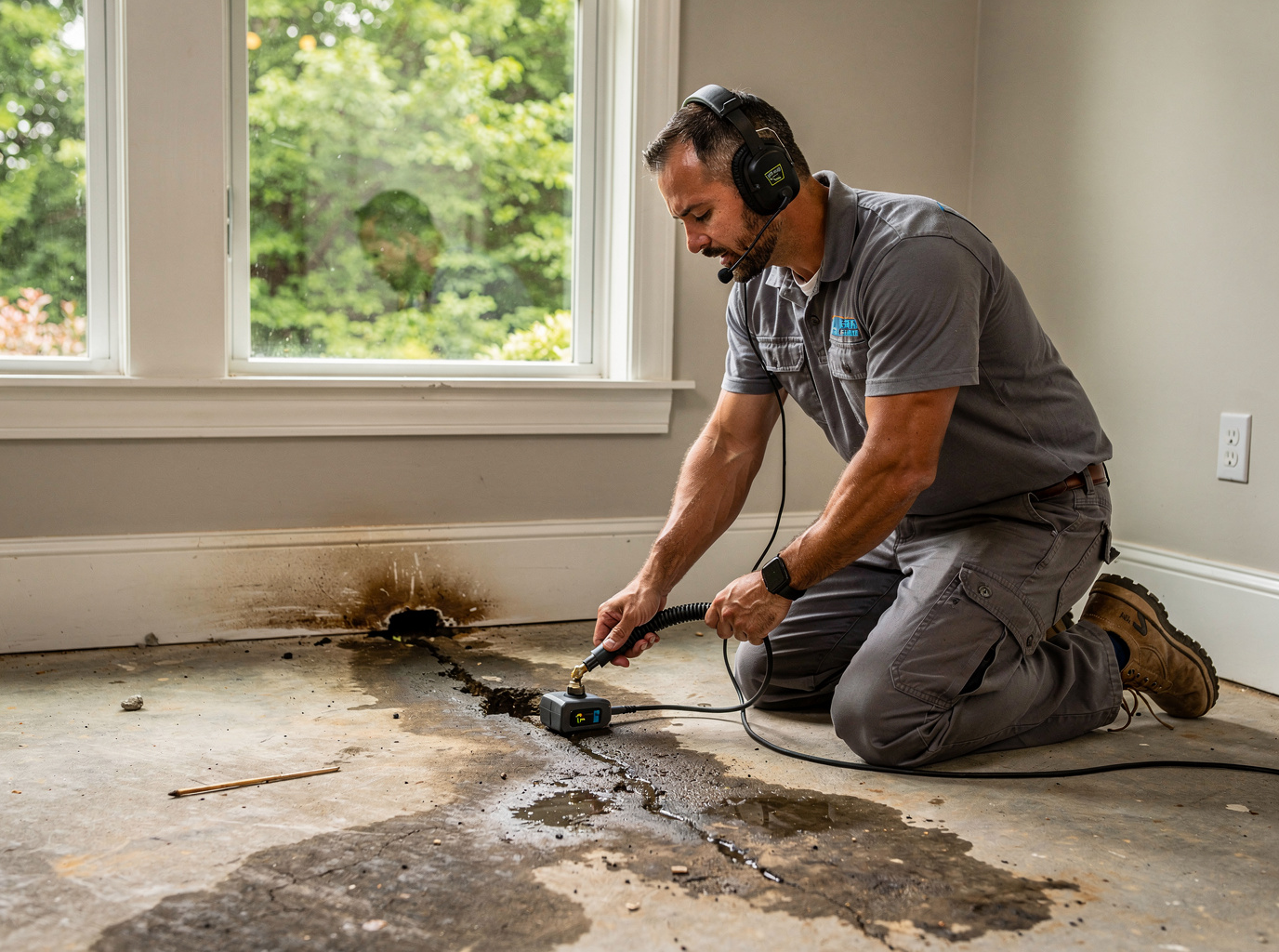
Slab leaks in Georgia homes often show up first as unexplained wet spots on floors, higher water bills, or warm areas underfoot in cooler months. These leaks occur when pipes beneath concrete foundations crack or corrode, and the humid subtropical climate with hot summers and mild winters speeds up the process through constant moisture and temperature swings. In neighborhoods such as Midtown, Buckhead, Virginia-Highland, and Inman Park, older homes built on slab foundations face this issue more often because of age-related pipe wear. The plumber uses targeted checks to locate the leak without unnecessary demolition.
Common Signs of Slab Leaks
Homeowners in Fulton County report several consistent indicators when a slab leak develops. Water stains or buckling hardwood near exterior walls often appear first in homes around Grant Park and Old Fourth Ward. A sudden spike in the monthly water bill without increased usage signals hidden water loss, and the sound of running water when all fixtures are off points to a continuous underground flow. Warm patches on tile floors during mild winters also stand out in East Atlanta and West End properties where the concrete retains heat from the leak. These signs differ from roof leaks because they stay localized to one area and worsen during heavy summer rains that raise groundwater levels.
How Local Plumbers Locate Slab Leaks
Detection starts with a pressure test on the water line to confirm loss, followed by acoustic listening devices that pick up the sound of water escaping under the slab. In areas near Piedmont Park and the Atlanta BeltLine, plumbers also use infrared cameras to spot temperature differences caused by escaping water. Sewer camera inspection helps when the leak connects to drain lines, letting technicians view pipe condition without digging. Electronic leak detection equipment traces the exact path of copper or galvanized lines common in homes built before 1980. The plumber combines these tools to limit floor removal to the smallest area possible.
Why Georgia Climate and Housing Age Matter
The region's hot summers increase pipe expansion and contraction, while mild winters keep groundwater present year-round and encourage corrosion. Homes in Decatur and Sandy Springs built on Fulton County soil often sit on expansive clay that shifts slightly with moisture changes, stressing joints over time. Slab leaks appear more frequently in neighborhoods with 1950s to 1970s construction where galvanized steel pipes remain in place. Why Georgia pipes burst and how to prevent it explains how these conditions interact with local water chemistry. Early detection prevents mold growth that thrives in the humid air once water reaches subfloor insulation.
Repair Options After Detection
Once located, options include rerouting the line through walls or ceilings to avoid further slab work, or spot repair if the break sits near an accessible edge. Costs typically range from $1,200 to $3,500 depending on access difficulty and whether concrete must be removed and replaced. In Buckhead and Virginia-Highland homes with finished basements, rerouting often keeps disruption lower. Plumbing repair covers both approaches, and the plumber provides a written estimate before any concrete cutting begins. Post-repair moisture testing confirms the area dries completely before new flooring is installed.