2026-10-26 ·
Hydro Jetting vs Snaking for Georgia Drains
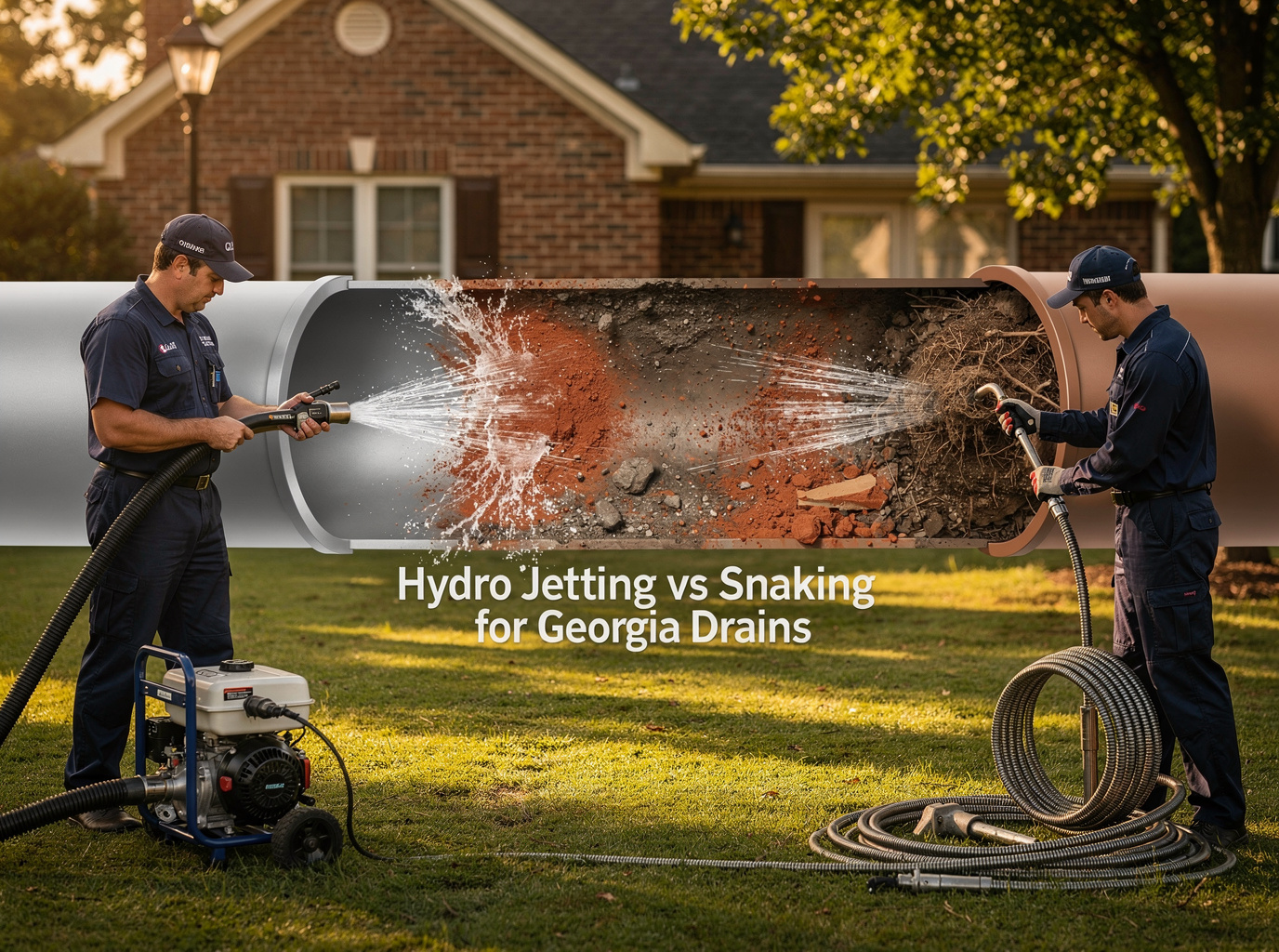
Hydro jetting clears stubborn buildup in Georgia drains more thoroughly than snaking when roots, grease or scale have narrowed the line. In Fulton County homes built before 1980, lines often carry decades of residue that a cable leaves behind while water pressure at 3,500–4,000 psi scours the pipe wall clean. Homeowners in Midtown or Inman Park usually see the difference after one visit rather than repeated calls.
Hydro Jetting vs Snaking for Georgia Drains
Georgia’s humid subtropical climate brings hot summers that soften grease and mild winters that keep roots active year-round. In older neighborhoods such as Virginia-Highland and Grant Park, clay or cast-iron lines run close to mature trees along the Atlanta BeltLine corridor. Snaking breaks through a single blockage but leaves residue that quickly reforms. Hydro jetting uses high-pressure water to strip the interior surface, restoring full diameter. The plumber selects the method after a camera check because each line’s material and access point determine the safer choice. In East Atlanta and West End properties, narrow backyard cleanouts often favor hydro jetting once the line is located.
Cost Ranges and What Moves the Price
Snaking a main line in Fulton County typically falls between $200 and $450 while hydro jetting runs $450 to $950. The spread depends on access depth, pipe diameter and whether the crew must clear multiple branches. Properties near Piedmont Park or Centennial Olympic Park often require longer hoses or traffic control, adding $100–$200. Tree-root jobs in Buckhead push costs toward the upper end because the operator repeats passes until flow is restored. A written estimate given on site lists every charge so the homeowner knows the total before work begins.
Choosing the Right Method for Local Conditions
When grease from nearby restaurants builds in lines serving Old Fourth Ward apartments, hydro jetting removes the coating that snaking smears along the pipe. In Sandy Springs and Decatur homes with cast-iron laterals, the plumber may start with a cable to confirm location then switch to water pressure for final cleaning. Mild winters allow roots to grow steadily, so lines near the Georgia Aquarium or Mercedes-Benz Stadium benefit from the scouring action that prevents regrowth for several seasons. Homeowners who notice slow drains after heavy rain usually need the more aggressive option.
FAQ
How long does each method take on a typical Fulton County line? Snaking finishes in 45–90 minutes while hydro jetting takes 90–150 minutes once the line is located.
Will either method damage older clay pipes common in Midtown? A camera inspection first identifies weak sections; the plumber adjusts pressure or chooses snaking to avoid cracking.
How often should Georgia homeowners schedule drain maintenance? Most properties need attention every 18–36 months depending on tree cover and cooking habits.
Can I switch from snaking to hydro jetting mid-job? Yes, the technician can change methods the same day if the initial cable pass shows remaining buildup.
See the full steps for clearing recurring clogs in the guide Drain Cleaning in Georgia: Signs Your Main Line Is Clogging. For details on the water-pressure process itself, review the page on hydro jetting.